2. Submerged Arc Welding (SAW) SAW (including submerged arc surfacing and electroslag surfacing) welds with an arc burning beneath a layer of granular flux. Its inherent advantages — stable weld quality, high productivity, no arc flash and minimal fume — make it a primary welding process for pressure vessels, pipe fabrication and box-section beams/columns in heavy steel structures.
3. Gas Tungsten Arc Welding (GTAW / TIG) GTAW uses argon as a shielding gas, hence also called argon-shielded arc welding. Argon is fed around the arc to isolate air from the weld zone and prevent oxidation. Based on conventional arc welding, GTAW uses high current to melt the filler metal into a molten pool on the base material, achieving metallurgical bonding, while a continuous argon flow keeps the molten metal from contacting oxygen in the air. This makes it suitable for welding stainless steel and other ferrous metals.
4. Oxy-Fuel Gas Welding (OFW) OFW uses the flame produced by burning a fuel gas with an oxidant as the heat source to melt the workpiece and filler material, achieving atomic bonding. The oxidant is mainly oxygen; common fuel gases include acetylene and LPG.
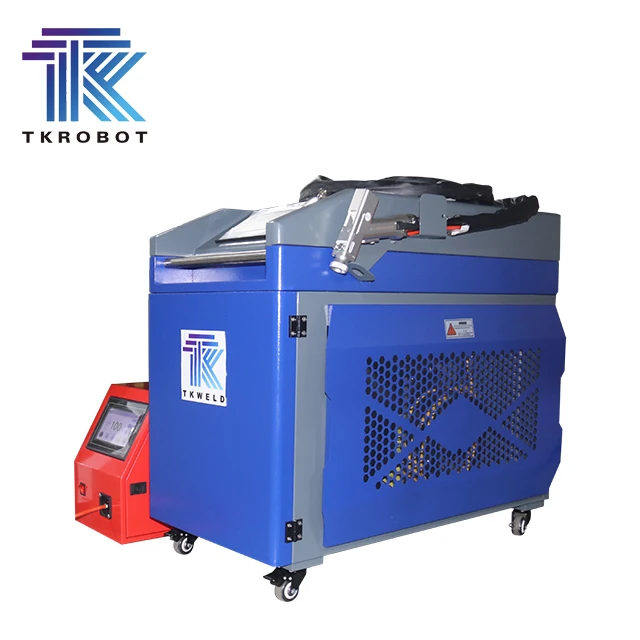
5. Laser Welding
Laser welding uses the heat generated when a focused laser beam strikes the workpiece as the energy source for welding. Thanks to optical properties such as refraction and focusing, it is ideal for micro-components and hard-to-reach welding areas. It also features low heat input, minimal welding distortion and immunity to electromagnetic fields. Due to the high cost of laser equipment and low electro-optical conversion efficiency, laser welding has not yet been widely adopted.
6. CO₂ Gas Shielded Welding (GMAW‑CO₂) CO₂ gas shielded welding is suitable for welding low-carbon steel and high-strength low-alloy steel in large steel structure projects. It delivers high productivity, good crack resistance, small welding distortion and wide adaptability, and can weld thin and medium-thickness plates.
7. Friction Welding Friction welding is a solid-state welding process. It uses heat generated by friction at the workpiece contact surfaces as the heat source. Under constant or increasing pressure and torque, relative motion between contact ends produces frictional heat and plastic deformation heat. The contact zone is heated to a temperature near (usually below) the melting point, reducing material flow resistance, improving plasticity and breaking interfacial oxide films. With upset pressure, plastic deformation and material flow occur; welding is achieved through interfacial molecular diffusion and recrystallization.
8. Ultrasonic Welding Ultrasonic welding transmits high-frequency vibration waves to the surfaces of two workpieces. Under pressure, the surfaces rub against each other to form fusion at the molecular level.
9. Soldering
Soldering joins workpieces using filler metals with a melting point no higher than 450°C. The assembly is heated to a temperature above the filler metal’s melting point but below that of the base metal. The filler spreads over closely fitted joint surfaces via capillary action or wetting. Solder alloys for soldering have a liquidus temperature ≤450°C and are normally non-ferrous. The 450°C threshold distinguishes soldering from brazing. Most process parameters and influencing factors for brazing also apply to soldering. Industrial terms such as soldering, hard soldering and silver soldering are used to differentiate soldering and brazing.
10. Brazing Brazing is a high-temperature joining process. Most brazing temperatures range from 1200 to 1400°F, much higher than soldering yet lower than fusion welding. Like soldering, brazing relies on capillary action to fill joints with filler metal. A wide variety of brazing filler alloys are available for joining nearly all metals and metal alloys.
Source: Welding Technology Summit
 Hot News
2026-10-04
2026-09-23
2026-09-17
2026-09-10
2026-08-25
2025-12-19
 EN
EN